Last updated October 15, 2026
The Complete Guide to ADU in Thousand Oaks
Most Thousand Oaks homeowners who end up with a bad ADU bid didn’t pick the wrong contractor. They talked to a contractor before they’d made the decisions a contractor needs answered to price the job honestly. A contractor who quotes without knowing your lot coverage, your setback situation, and your utility access is either guessing or padding the number. This guide walks through building an accessory dwelling unit in Thousand Oaks as a sequence of nine decisions, in the order they actually need to happen, so you can walk into every conversation knowing what the real number should look like.
Quick Answer
Building an ADU in Thousand Oaks requires working through nine decisions in sequence: confirming your parcel’s jurisdiction (City of Thousand Oaks vs. Ventura County), checking lot coverage and setbacks, identifying utility connection points, determining financing, choosing between a detached ADU, attached ADU, or JADU, selecting a build method (conventional, prefab, or modular), getting a written fixed-price contract, then permitting and construction. A detached ADU in Thousand Oaks typically runs $180,000 to $420,000 depending on size, build method, and site conditions, with garage conversions landing between $90,000 and $180,000. Getting the sequence wrong, designing before you know your constraints, is the single most expensive mistake homeowners make.
Table of Contents
- Decision One: Confirm Your Jurisdiction, City of Thousand Oaks or Ventura County
- Decision Two: Lot Coverage and Setbacks Before Design
- Decision Three: Utility Connections, Water, Sewer, and Power
- Decision Four: Financing and the Real Cost Picture
- Decision Five: Detached ADU, Attached ADU, or JADU
- Decision Six: Build Method, Conventional, Prefab, or Modular
- Decision Seven: What a Written Fixed-Price Contract Must Contain
- Decision Eight: Permits, the Thousand Oaks Timeline, and Inspection Phases
- Decision Nine: Choosing the Contractor and Holding Them Accountable
- Common Mistakes to Avoid
- When to Call a Professional
- Frequently Asked Questions
Decision One: Confirm Your Jurisdiction, City of Thousand Oaks or Ventura County
Your first ADU decision in Thousand Oaks is jurisdictional, and it is not always obvious. Some parcels with a Thousand Oaks mailing address are actually in unincorporated Ventura County, not within City of Thousand Oaks limits. The zip code does not tell you. A Thousand Oaks address like 91360 or 91362 can sit in either jurisdiction depending on the parcel boundary, and the rules for ADUs differ between the two agencies on specific points like setback enforcement, lot coverage calculation, and review timelines.
Here is how to confirm it. Pull up your parcel number from your property tax bill, then search the Ventura County Assessor’s parcel map system. The map will show whether your parcel falls within the incorporated City of Thousand Oaks boundary or in an unincorporated county pocket such as portions of Newbury Park or the areas east of the 23 Freeway. If you are on city land, the City of Thousand Oaks Community Development Department governs your ADU. If you are on county land, Ventura County Planning applies.
Why this matters before anything else: a contractor who quotes you based on city rules when you are in county jurisdiction, or vice versa, will have the number wrong before the first plan is drawn. Both agencies are bound by California state ADU law, which overrides local restrictions in most cases, but local enforcement and interpretation vary. We have seen homeowners pay for a survey and preliminary design only to discover the permit path was different than assumed. Confirm jurisdiction first. It costs nothing but an hour of reading a parcel map.
Decision Two: Lot Coverage and Setbacks Before Design
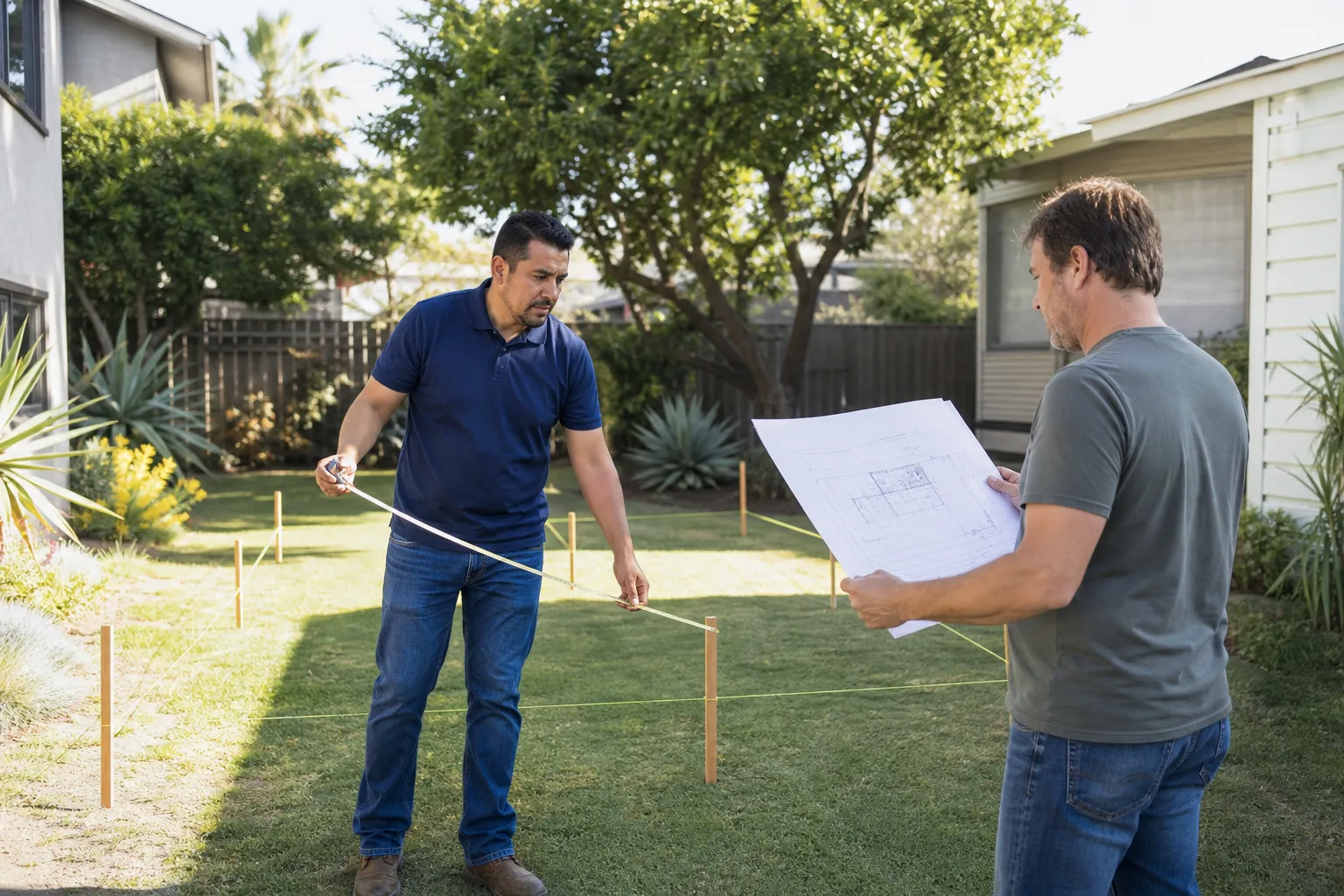
Once you know your jurisdiction, the next decision is understanding what your lot will physically allow. Lot coverage is the percentage of your property that can be covered by structures. Setbacks are the required distances from your property lines. Both constrain your ADU before a single design decision is made. A homeowner who sketches a 1,200-square-foot detached ADU on a 6,000-square-foot Thousand Oaks lot without checking coverage limits has already designed something that cannot be permitted.
California state ADU law sets maximum setbacks for ADUs: 4 feet for side and rear setbacks on a detached ADU, with no setback required for an ADU converted from an existing permitted structure like a garage. Local codes can tighten this in specific ways, and Thousand Oaks and Ventura County both apply their own lot coverage formulas. A setback variance, which is the city’s written permission to build closer to the property line than the standard rule allows, is possible but adds time and cost. It is never automatic.
What you need to know before design: your parcel’s exact dimensions from a survey or site plan, the applicable lot coverage percentage for your zone, and where your existing house sits relative to the property lines. Hillside lots in Thousand Oaks, common in areas like Wildwood or Lang Ranch, add grading and slope constraints that flat lots do not have. Do not skip this step. It eliminates design options that were never viable and prevents a contractor from pricing a fantasy.
Decision Three: Utility Connections, Water, Sewer, and Power
Utility connections are where ADU budgets in Thousand Oaks go sideways. Water, sewer, and electrical are not a single line item. They are a variable cost driven by the distance from your ADU location to the existing service points, the capacity of your current panel, and whether the sewer line has the slope and depth to accept a new connection without moving pipe. A detached ADU in a rear yard 60 feet from the house has a different utility picture than a garage conversion attached to the existing structure.
Water is usually the simplest: a branch line from the existing main service, sized for the added fixture count. Sewer is harder. Thousand Oaks lots in the older neighborhoods near Lynn Road and Thousand Oaks Boulevard often have sewer laterals at a depth or slope that requires a pump if the ADU plumbing is set lower than the main line. A grinder pump and electrical connection for it can add $4,000 to $8,000 to the job. Get the sewer answer before you commit to a footprint.
Electrical is the third variable. Many Thousand Oaks homes built before the 1990s have 100-amp panels. A new ADU with a kitchen, laundry, and HVAC can require a panel upgrade to 200 amps, which itself runs $2,500 to $5,000 before the ADU’s own subpanel and feeders. If the ADU is detached, trenching for conduit and pipe adds cost by the linear foot plus restoration of the yard. We advise every homeowner to get a utility feasibility answer from a licensed contractor before architectural drawings are finalized. Drawings are cheap to change; underground pipe is not.
Decision Four: Financing and the Real Cost Picture
Financing comes before design in the correct ADU sequence because the money dictates the scope. A homeowner who designs first and finances second has already fallen in love with a build they may not be able to fund. Thousand Oaks homeowners typically finance ADUs through one of four paths: cash, a home equity line of credit, a cash-out refinance, or a construction loan. California also has grant programs for ADUs in specific circumstances, though eligibility changes and should be checked directly with the program administrator rather than assumed.
Here are honest cost ranges for Thousand Oaks as of the current market:
- Garage conversion ADU: $90,000 to $180,000 depending on condition, foundation work, and whether utilities need panel upgrades or sewer work.
- Detached ADU, conventional build: $220,000 to $420,000 for 600 to 1,200 square feet, with the low end being simple rectangular builds and the high end including custom foundation work, hillside grading, and upgraded finishes.
- Prefab or modular ADU: $150,000 to $350,000 including the factory build, site work, crane or delivery, and utility hookups. Brands like Boxabl, Plant Prefab, and Tuff Shed-style structures sit at different points on this spectrum depending on what the platform includes.
- JADU (junior ADU within the existing house): $40,000 to $90,000 for a conversion of existing space like a bedroom or bonus room with a separate entrance and kitchenette.
All of these numbers are before permit fees, which in Thousand Oaks run several thousand dollars depending on the scope and plan check complexity. Financing determines which of these brackets is realistic. Get a loan pre-approval or a clear cash budget before you talk design. It saves everyone time and keeps the conversation honest.
Decision Five: Detached ADU, Attached ADU, or JADU
Thousand Oaks permits three ADU types under California state law, and each has different tradeoffs in cost, square footage, and rental potential. The three types are a detached ADU, a new standalone structure in the rear or side yard; an attached ADU, an addition connected to the primary residence with its own entrance; and a JADU, a junior accessory dwelling unit created from existing space inside the home, capped at 500 square feet.
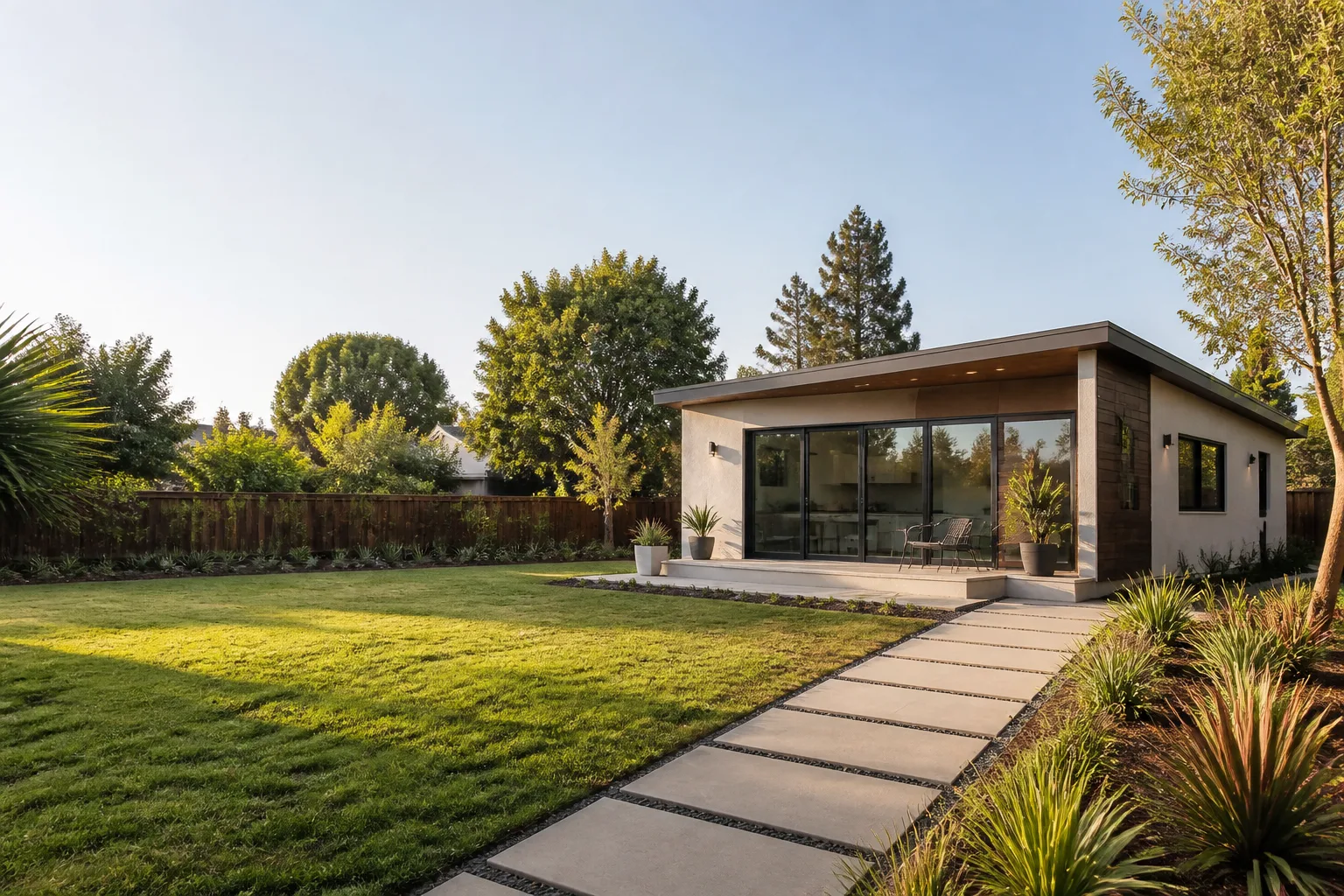
A detached ADU gives the most privacy and the highest rental income potential, but it costs the most because of the foundation, separate roof, and full utility run. On a 7,000-square-foot Thousand Oaks lot, a 800-square-foot detached ADU in the rear yard typically consumes a meaningful portion of the remaining yard. An attached ADU costs less per square foot because it shares at least one wall and sometimes utilities with the main house, but it changes the footprint of your existing home and triggers more extensive plan review for the structural tie-in. A JADU is the cheapest path to legal rental space, often a converted bedroom or den with a kitchenette and separate exterior entrance, and it counts toward the property’s ADU allowance while costing a fraction of a new build.
The decision is driven by your lot geometry, your budget, and your intent. If the ADU is for a family member, a JADU may be enough. If it is for market rental income in a neighborhood like Newbury Park, a detached unit often pencils better over time. If the lot is narrow or the rear yard is shallow, an attached ADU may be the only realistic path. State law lets a single property have one ADU and one JADU in most cases, so the choice is not always either-or.
Decision Six: Build Method, Conventional, Prefab, or Modular
Build method is the decision most Thousand Oaks homeowners skip until too late, and it changes both the price and the schedule. If you’re weighing your options, read our DIY vs Professional ADU: The Thousand Oaks Homeowner’s Decision Guide. Conventional construction, stick-built on site, is the default for attached ADUs and custom detached units. Prefab and modular platforms ship a largely complete unit or a kit of panels, and the site work happens in parallel with the factory build. Both are viable in Thousand Oaks; they are not interchangeable.
Conventional builds using materials like James Hardie siding give the most design flexibility and the easiest path through Thousand Oaks plan check, because the plans are drawn for your exact lot from the start. The tradeoff is time on site, typically 6 to 12 months, and more exposure to weather and material delays. Prefab platforms like Boxabl and Plant Prefab compress factory construction to weeks, but you trade design flexibility for a catalog of fixed floor plans, and the site work for foundation, utility stubs, and crane placement still happens on your lot’s schedule. Tuff Shed-style structures fall into a lower-cost category for some conversions and basic studio builds, but they are not a substitute for a permitted ADU with a kitchen and bath unless the build is designed for that purpose from the start.
What matters is that the build method matches your budget and your lot constraints. A hillside lot with difficult crane access makes some prefab deliveries impossible or expensive. A flat Thousand Oaks lot with good rear access makes prefab delivery straightforward. We have worked with several modular platforms and we tell homeowners straight: pick the method after you know the site conditions, not before. The method follows the lot.
Decision Seven: What a Written Fixed-Price Contract Must Contain
The contract is the document that separates a serious contractor from a guess. In Thousand Oaks, where the average ADU project runs six figures, a verbal estimate is worth nothing. A written fixed-price contract is the only document that protects you from a price that moves after demolition begins. Here is what it must contain before you sign.
- Scope of work. Every room, every fixture, every material finish, written in plain language. If it is not in the scope, it is a change order later, which means a higher price.
- Fixed price. The number you approve on day one is the number on the final invoice. Exclusions are spelled out so nothing is a surprise. A contractor unwilling to put a fixed price in writing is telling you something about how they run jobs.
- Payment schedule. Tied to completed phases of work, not dates. You pay for what has been built and inspected, not for promised progress.
- Permit responsibility. Who pulls the permits, who schedules the inspections, and who pays the fees. The contract should state that permits are included and that all required inspections will be passed before final payment.
- Timeline with phases. Broken into demobilization, site work, framing, mechanical, finishes, and final inspection, with a start date and a reasonable completion window. Perfection in construction schedules does not exist, but a contractor who cannot commit to phases cannot be held accountable to any schedule.
- Warranty. A written guarantee covering workmanship defects, with a defined term and a defined process for corrections. Ours is the 365-Day Done Right Promise: if something fails within a year of completion, we come back and make it right at no charge. Whatever the warranty is, it must be on paper.
Absence of any of these six elements is a signal. Not a red flag by itself, but a reason to ask more questions. A contractor who hands you a one-page proposal with a number and a handshake is asking you to absorb risk that a written contract transfers to the contractor. On a project this size, you do not absorb that risk.
Decision Eight: Permits, the Thousand Oaks Timeline, and Inspection Phases
Permitting in Thousand Oaks follows a state-mandated path: ADU permit applications must be reviewed ministerially, meaning without discretionary hearings or subjective design review, and a decision must be issued within 60 days of a complete application. In practice, the review clock starts when the city or county declares the application complete, which is not the same day you file it. Plan check comments, corrections, and resubmittals extend the timeline. A realistic Thousand Oaks ADU permit takes 3 to 6 months from first submittal to issued permit, depending on the complexity of the plans and the responsiveness of the applicant.
Construction is the longer phase. An attached ADU or garage conversion can run 4 to 8 months. A detached conventional ADU typically runs 6 to 12 months from permit issuance to final inspection. Prefab and modular builds compress the structural portion but still require 2 to 4 months of site work before delivery and 1 to 2 months of finish work after it. Occupancy comes only after the final inspection passes and the city or county issues a certificate of occupancy.
Here is the phase structure a homeowner should use to hold a contractor accountable:
- Pre-construction: survey, plans, plan check, permit issuance. 3 to 6 months.
- Site work and foundation: excavation, grading, utilities, foundation pour. 4 to 8 weeks.
- Framing and structure: walls, roof, windows, exterior envelope. 6 to 10 weeks for conventional; handled in the factory for prefab.
- Mechanical, electrical, plumbing: rough-in and inspections. 4 to 8 weeks.
- Finishes: drywall, flooring, cabinetry, fixtures, paint. 6 to 10 weeks.
- Final inspection and occupancy: city or county final sign-off, certificate of occupancy. 1 to 2 weeks.
Every phase has an inspection checkpoint. Insist that your contractor names them in the contract and that you are notified before each one. An inspection that gets called and passed is real progress. A phase described as “almost done” without an inspection record is not.
Decision Nine: Choosing the Contractor and Holding Them Accountable
The contractor choice comes last in the sequence because by the time you make it, you know your jurisdiction, your lot constraints, your utility picture, your budget, your ADU type, your build method, and your contract requirements. For help with this step, see our guide on how to hire an ADU contractor in Thousand Oaks. A homeowner who does the sequence in order walks into a contractor conversation with facts, not guesses. A homeowner who does it backward hands the contractor the power to define the project.
Here is what to look for when you sit down with a builder. A real ADU contractor in Thousand Oaks will give you a written price before any work starts. Not a range. Not an estimate that is “subject to change.” A number, on paper, tied to a scope of work. They will pull permits and pass inspections. They will name their warranty in writing and tell you exactly what happens if something fails. They will have the trade fluency to discuss your build method options, whether that is a conventional stick build with James Hardie siding, a prefab platform like Boxabl or Plant Prefab, or a conversion from an existing structure.
Our operation, Fielding ADU Thousand Oaks, runs on what we call The Garrison Code: show up in the window, price in writing, build by the book, leave it clean, stand behind it for a year. That last part is formalized as the 365-Day Done Right Promise. If workmanship fails within a year of completion, we return and correct it at no charge. We put that on paper before the first nail is driven, because a guarantee that is not written down is a suggestion. We also answer the phone with a live person around the clock, and every crew member on a Thousand Oaks site is background-checked and uniformed. You should expect the same standard from any contractor you invite to bid.
For more detail on what we build and how, see our ADU Builders in Thousand Oaks page. If your project involves converting existing space rather than building new, our Garage Conversion Contractor in Thousand Oaks guide covers that path in depth. And if the ADU is part of a larger plan that includes adding square footage to the main house, our Room Addition Contractor in Thousand Oaks page walks through that decision tree. You can also start from our Fielding ADU Thousand Oaks home page for an overview of everything we do.
Common Mistakes to Avoid
- Designing before checking jurisdiction and setbacks. A plan for a detached ADU that violates lot coverage or setback rules is a drawing, not a project. Confirm your parcel is in City of Thousand Oaks or Ventura County jurisdiction and check your coverage numbers before you pay for design.
- Skipping the sewer and panel check. A rear-yard ADU on an older Thousand Oaks lot with a shallow sewer lateral or a 100-amp panel can carry thousands in hidden costs. Get the utility feasibility answer early.
- Accepting an estimate without a written fixed price. An estimate is an opinion. A written fixed-price contract is a commitment. On a six-figure ADU, the difference is the entire risk profile of the job.
- Choosing the build method before understanding the lot. Prefab panels do not fix a lot with no crane access. Hillside grading in neighborhoods like Lang Ranch does not care how efficient the factory was. Method follows lot.
- Assuming the permit clock starts the day you file. The 60-day ministerial review clock in California starts when the application is deemed complete, not when it is submitted. Plan for 3 to 6 months from first filing to issued permit.
- Not tying payments to inspection checkpoints. A contractor paid on a calendar schedule has no incentive to stay on schedule. Pay for completed, inspected phases only.
- Accepting a verbal warranty. A guarantee that is not written down does not exist in a dispute. Whatever the warranty is, get it on paper with the term and the correction process named.
When to Call a Professional
Some parts of this sequence you can handle on your own: confirming your jurisdiction, checking your parcel on the county assessor’s map, and getting a financing pre-approval are all doable from a kitchen table. But when you hit the structural questions, set variables like foundation type, utility connection feasibility, plan check coordination, and the contract itself, you are better served by a licensed contractor who has done this in Thousand Oaks before. A professional should review your survey and give you a written feasibility answer before you pay for architectural drawings. If a previous contractor gave you a price that moved after the job started, or left a permit board empty, that is not a reason to go it alone. It is a reason to switch to a contractor who puts the price in writing and builds by the book. Fielding ADU Thousand Oaks offers free estimates in Thousand Oaks, call (805) 309-3020.
Frequently Asked Questions
An ADU in Thousand Oaks typically costs $90,000 to $180,000 for a garage conversion, $180,000 to $420,000 for a detached conventional build, and $150,000 to $350,000 for a prefab or modular unit, before permit fees. The final number depends on square footage, site conditions, utility work, and finish level. Call (805) 309-3020 for a written, fixed-price quote for your specific lot.
Permitting an ADU in Thousand Oaks typically takes 3 to 6 months from first submittal to issued permit, and construction runs 4 to 12 months depending on the build method and ADU type. The total timeline from first decision to certificate of occupancy is usually 10 to 18 months. Prefab and modular builds can compress the structural phase but site work and finish work still run on your lot’s schedule.
A detached ADU is a standalone structure in the rear or side yard, an attached ADU is an addition connected to the primary house with its own entrance, and a JADU is a junior accessory dwelling unit of up to 500 square feet created from existing space inside the home. Detached ADUs have the highest cost and the most rental privacy; JADUs are the cheapest path to legal rental space.
Yes, ADUs are permitted on hillside lots in Thousand Oaks neighborhoods like Wildwood and Lang Ranch, but grading, slope, and foundation requirements add cost and time compared to a flat lot. A setback variance may be needed if the buildable area is constrained. Get a site feasibility review before you commit to a footprint.
Yes, we have experience with leading prefab and modular ADU platforms including Boxabl and Plant Prefab, as well as conventional builds using James Hardie siding and Tuff Shed-style structures. We match the build method to your budget and lot rather than forcing one approach on every project.
It should not, if you have a written fixed-price contract with a defined scope of work. Change orders occur only when you add or change something after the contract is signed. Fielding ADU Thousand Oaks puts the price in writing before any work starts, and the number you approve on day one is the number on the final invoice. Call (805) 309-3020 for an exact quote.
The Bottom Line
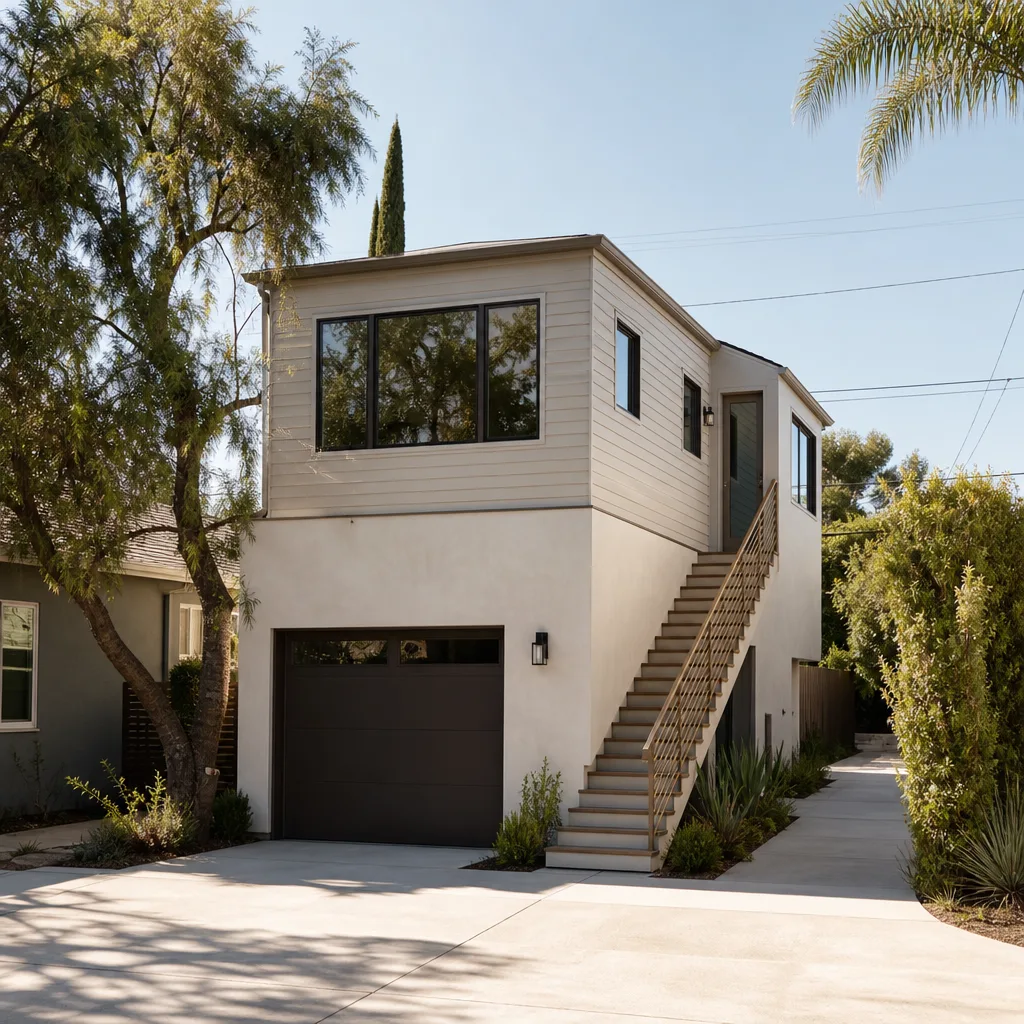
Building an ADU in Thousand Oaks is nine decisions, and they have an order. For more guides & resources on each step, explore our blog. Jurisdiction. Lot coverage and setbacks. Utilities. Financing. ADU type. Build method. Contract terms. Permits and timeline. Contractor choice. Get them in that sequence and every conversation you have will be grounded in facts, not guesses. Get them out of order and you will pay for it: in redesign fees, in change orders, or in a contractor who never should have been allowed to quote. The written, fixed-price contract is the single most important document in the entire process, and the warranty belongs on paper next to it. If you are ready to start the sequence, call (805) 309-3020 for a free estimate. We will give you a written price and a straight answer about whether your ADU works, before you spend a dollar on drawings.
Written by Reed Calloway, Owner at Fielding ADU Thousand Oaks, serving Thousand Oaks since 2006.