Plant Prefab New Detached ADU: The Thousand Oaks Owner’s Guide
A new detached ADU from Plant Prefab is a complete accessory dwelling unit built in their factory and assembled on your Thousand Oaks lot. When we get calls about a failing part, it’s rarely the whole unit. It’s usually one system: the exterior cladding joint, the roof-to-wall transition, the utility connection panel, or the foundation interface. Fielding ADU Thousand Oaks stocks and installs Plant Prefab-compatible replacement components, and a typical repair on these units in Thousand Oaks runs $850 to $4,200 depending on which system failed and whether we’re matching OEM specs or upgrading to a better-performing equivalent. Reed Calloway and our crew have been working on prefab ADU systems across Ventura County for years, and we answer our own phones.
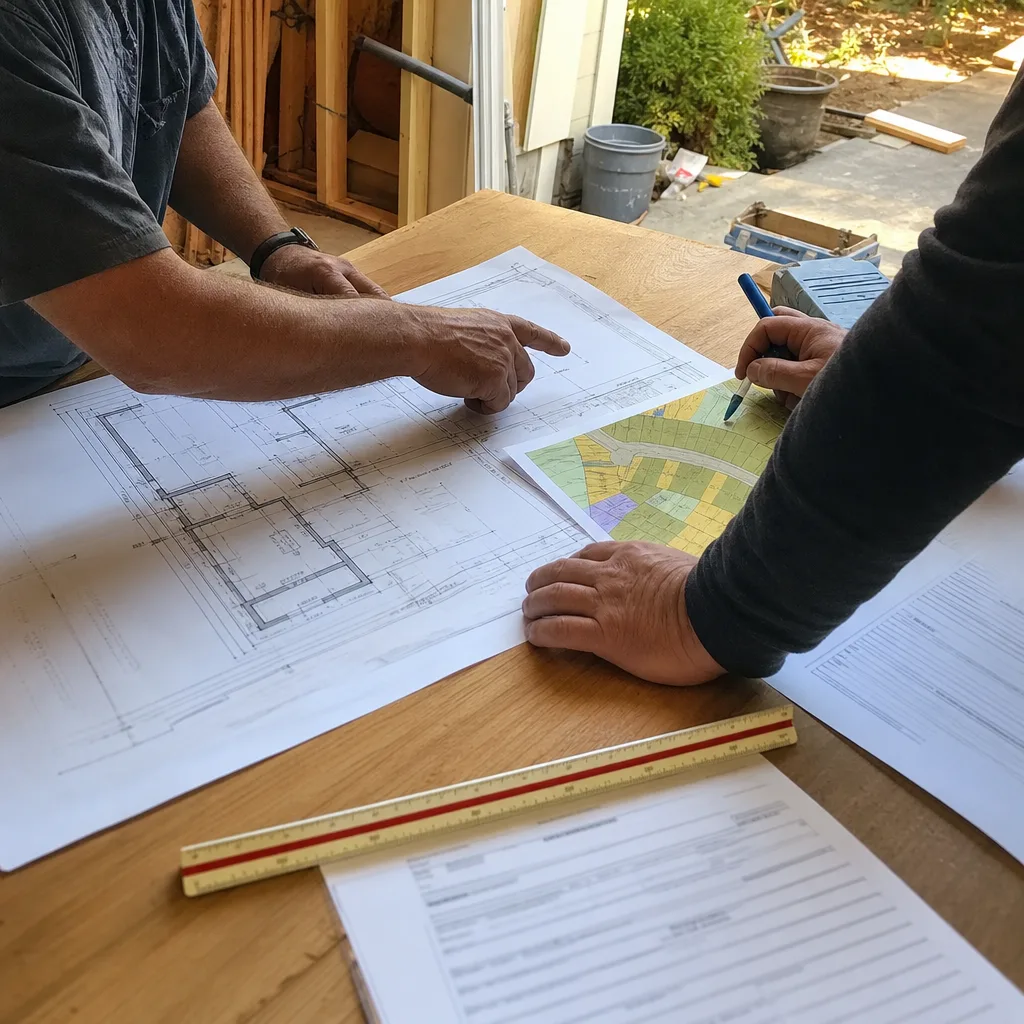
Most owners discover the issue the way you probably did: a damp spot on the interior drywall near the roof line after a winter rain, a door that no longer closes square, or a utility bill that spiked because the HVAC connection to the main house worked loose. Plant Prefab builds a good product, but Thousand Oaks sits in a climate that tests every exterior system: summer heat that bakes west-facing cladding to 140-plus degrees, Santa Ana winds that push driving rain sideways, and soil that expands and contracts through the wet-dry cycle. Factory-built panels move differently than site-built framing, and the connection points are where failures show up first.
Key Takeaways:
- We stock Plant Prefab-compatible parts for cladding, roof transitions, utility panels, and foundation interfaces.
- Installed repairs in Thousand Oaks typically run $850 to $4,200, written in plain English before any work starts.
- Every repair is covered by the Garrison Standard: 365 days, in writing, we come back and fix it at no charge if it fails.
- We are an independent service provider, not affiliated with Plant Prefab. We fix what needs fixing, and we don’t upsell you into a rebuild unless you genuinely need one.
Which Plant Prefab Models This Applies To
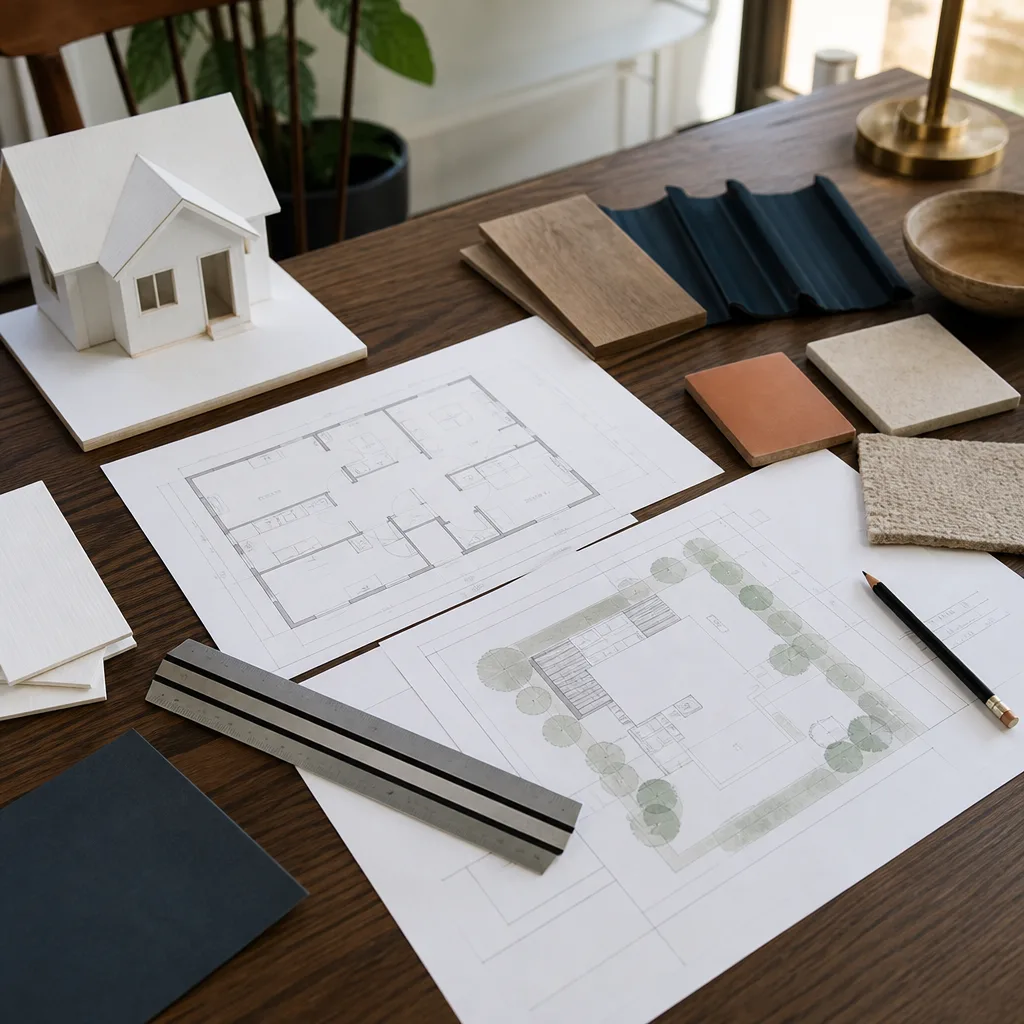
Plant Prefab has built several detached ADU series over the years, and the parts you need depend on which generation you own. The earlier LivingHome series used a panelized wood frame with cement-board lap siding, similar in spec to what you’d see on a conventional Thousand Oaks build. The more recent Plant Prefab units shifted toward their Plant Building System, which pairs steel framing with denser exterior insulation and a rainscreen cladding assembly. That matters for parts matching: a cladding panel from the older series will not align with the newer rainscreen clip system, and a roof membrane spec’d for the original build may not match the current panel profile. We always check the unit’s serial plate, usually mounted inside the utility closet or on the main electrical panel door, before we order or fabricate.
On the OEM-versus-aftermarket question, here’s the honest version. For structural or waterproofing components, we match Plant Prefab’s original spec when it’s still available. For exterior trim, flashing, and utility connection hardware, we often use aftermarket parts that outperform the original in Thousand Oaks conditions. One example: the factory roof-to-wall flashing on early units was a standard galvanized profile, and we’ve replaced several with a heavier 26-gauge stainless profile that holds up better to Santa Ana wind-driven rain. The work has to be done right, though, because a prefab panel system has tighter tolerances than site-built framing. A flashing replacement that’s off by even a quarter inch will leak within a season.
Signs Your Plant Prefab New Detached ADU Is Failing
- Interior drywall staining or soft spots near the ceiling corners. This is almost always a roof-to-wall transition or a cladding joint letting water in. On prefab panel units, the panel joints concentrate movement stress, and sealant breaks down faster there than anywhere else on the building. Cause: failed joint sealant or flashing detaching from the panel face.
- Exterior cladding panels that bow, gap, or rattle in wind. Factory-installed cladding clips can loosen over time as the panels expand and contract through Thousand Oaks’ 60-plus-degree annual temperature swing. Cause: clip fatigue or improper tension, sometimes accelerated by a wall that faces full west sun.
- The ADU’s main entry door no longer closes square, or the interior door gaps widen at the top and narrow at the bottom. Detached ADUs bear on foundation piers or a pad, and soil movement in Thousand Oaks (especially in neighborhoods with expansive clay like Lynn Ranch) can shift the unit slightly. Cause: foundation settlement or interface brackets that need re-shimming.
- A utility bill that climbed without explanation, or the mini-split works harder than it used to. The connection where the ADU’s electrical and HVAC lines run from the main house is a common failure point. If the conduit or duct connection works loose, you’re paying to condition outside air. Cause: vibration, UV degradation on exposed seals, or a ground movement that pulled the connection apart.
- Water pooling at the base of the exterior wall after rain. On a new detached ADU, the foundation interface flashing is meant to direct water away from the base plate. When it fails, water sits against the structure. In Thousand Oaks’ winter wet season, that turns into musty interior air within weeks. Cause: flashing damage from landscaping equipment, or an original install that didn’t account for the lot’s drainage pattern.
Replacement Cost & What’s Included
Our pricing for Plant Prefab new detached ADU repairs in Thousand Oaks breaks down like this: cladding joint repair and reseal runs $850 to $2,100 per wall section depending on how many panels are involved. Roof-to-wall flashing replacement lands between $1,400 and $3,800 depending on roof access and whether we’re matching the original profile or upgrading to stainless. Utility connection repairs run $700 to $2,400, and foundation interface re-shimming starts around $1,200 to $3,500 depending on access and how far the unit has moved. Every price includes parts, labor, and our written scope of work, handed to you before anything is touched. You’ll know the exact number on day one, and that number holds through the final invoice. No change orders, no door-knock surprise on punch-out day.
The price you approve is the price you pay, and the work is guaranteed in writing for a full year under the Garrison Standard. If a repair we made fails within 365 days, we come back and fix it. No charge, no fine print. We’ve been building to this standard since 2006, and it’s the reason most of our Thousand Oaks work comes from people who already know a contractor who didn’t do what they said they’d do.
DIY or Call Us?
There are things you can safely check on your Plant Prefab detached ADU before you call us. Look at the exterior cladding joints: are any sealant beads cracked, pulled away, or missing? Check the interior near windows and ceiling corners after the next rain. Note where your utility lines run from the main house to the unit. That’s diagnosis, and it helps us quote accurately.
What you should not do yourself is open the cladding or roof transition. Prefab panels are under structural load, and the connection points are engineered to specific tolerances. If you pry a panel loose without bracing properly, you can compromise the wall assembly or the roof-to-wall connection. The same goes for anything involving the electrical panel or the main service connection to the house. That’s live electrical work, and it needs a licensed professional. We carry Plant Prefab-compatible cladding clips, flashing stock, and utility connection hardware on our trucks, so when we show up for a Thousand Oaks repair, we usually have what we need the first trip. Call Reed and our crew at (805) 309-3020 if you want a pair of eyes on it before you touch anything.
FAQs
Exterior sealants and flashing on a Plant Prefab unit typically last 7 to 12 years in Thousand Oaks before they need attention, but that range shortens if the unit faces west and takes full afternoon heat. Original roof membrane and cladding panels can last 20 to 30 years when the seam maintenance is done on schedule. If your unit is approaching year 10 and hasn’t been re-sealed, it’s time to have it looked at. Call (805) 309-3020 and we’ll quote the inspection.
Most cladding joint failures can be repaired by cleaning out the failed sealant, re-flashing the seam properly, and re-sealing with a product matched to the panel type. Whole panel replacement is only necessary when the panel itself is cracked, rotted, or the factory clip system has failed at multiple points. We’ll tell you which one you have, and we’ll show you the failure before we write anything up. Estimates are free.
Most single-system repairs on a Plant Prefab ADU, such as cladding joint reseal or flashing replacement, take one full day on site. Utility connection repairs are usually done in a half day. Foundation re-shimming can run two days depending on how much the unit has moved and how accessible the base is. We’ll give you the timeline in writing before we start.
We stock the parts that fail most often in Ventura County: cladding clips in the common profiles, seam sealants matched to cement-board and fiber-cement panels, stainless and galvanized flashing in the gauges Plant Prefab units use, and utility connection hardware. Odd-size or model-specific components are ordered per job, usually with a 3 to 5 day lead time. For an exact quote on your unit, call (805) 309-3020.
Written by Reed Calloway, Owner, Fielding ADU Thousand Oaks at Fielding ADU Thousand Oaks, serving Thousand Oaks and nearby areas.