Plant Prefab Site Prep & Utilities: The Thousand Oaks Owner’s Guide
Site prep and utilities for a Plant Prefab ADU in Thousand Oaks typically run $28,000 to $55,000 depending on what your lot already has, and we can have most jobs quoted within a week of walking the property. The number covers grading, foundation, trenching, water, sewer, electrical service, and the final hookup to your Plant Prefab module. Most owners discover an issue in one of two ways: either their general contractor went silent after the factory order went in, or they got a change order that doubled the civil work because nobody checked the slope before quoting it.
We are an independent service provider, not affiliated with Plant Prefab. We do, however, work with Plant Prefab plans regularly enough that we know what their modules need before the truck shows up.
Which Plant Prefab Models This Applies To

This applies across Plant Prefab’s current lineup: the LivingHome series (including the smaller C6 and the larger YB models), the ADU-specific units built around the California 800-square-foot threshold, and custom configurations. The site prep requirement doesn’t change much by model. What changes is the utility stub-out location. Plant Prefab ships their modules with plumbing and electrical penetrations at fixed points under the chassis, and if your foundation contractor placed the sewer riser or conduit six inches off, you’re cutting concrete after the fact. That’s the most common compatibility error we see in Thousand Oaks. Newbury Park and Lynn Ranch lots, in particular, tend to have older sewer laterals that were never surveyed to the inch. We insist on a formal utility survey before the foundation is poured. It costs a few hundred dollars and saves thousands.
On the parts side, if you’ll need replacement components down the road, Plant Prefab uses standard fixtures and standard Schedule 40 waste lines inside the module. What’s Plant Prefab-specific is the steel chassis anchoring system and the seismic tie-down points. Those are built to the module’s exact frame spacing, and we’ve yet to find an aftermarket equivalent worth recommending. For below-grade utility boxes, cleanouts, and meter panels, OEM or quality aftermarket both work, and we stock what Thousand Oaks inspectors routinely approve.
Signs Your Plant Prefab Site Prep & Utilities Is Failing
- Water pooling near the foundation after rain. The lot wasn’t graded to move water away from the slab, or the drainage swale that was drawn on the plan was never cut. In Thousand Oaks’s winter rain pattern, this shows up fast and usually worsens with every storm.
- Sewer gas smell near the module. The sewer lateral wasn’t graded at true 2% slope, or a coupling shifted during backfill. Waste lingers in the line instead of flowing out to the city main. This is both a health issue and a sign the original civil contractor cut corners on trench inspection.
- Breaker trips when the mini-split kicks on. The electrical service wasn’t sized for the module’s actual load, or the conduit run from the main panel to the ADU is too long for the wire gauge originally quoted. Plant Prefab modules with electric heat pumps pull real amperage; an undersized feed wire will trip breakers every season change.
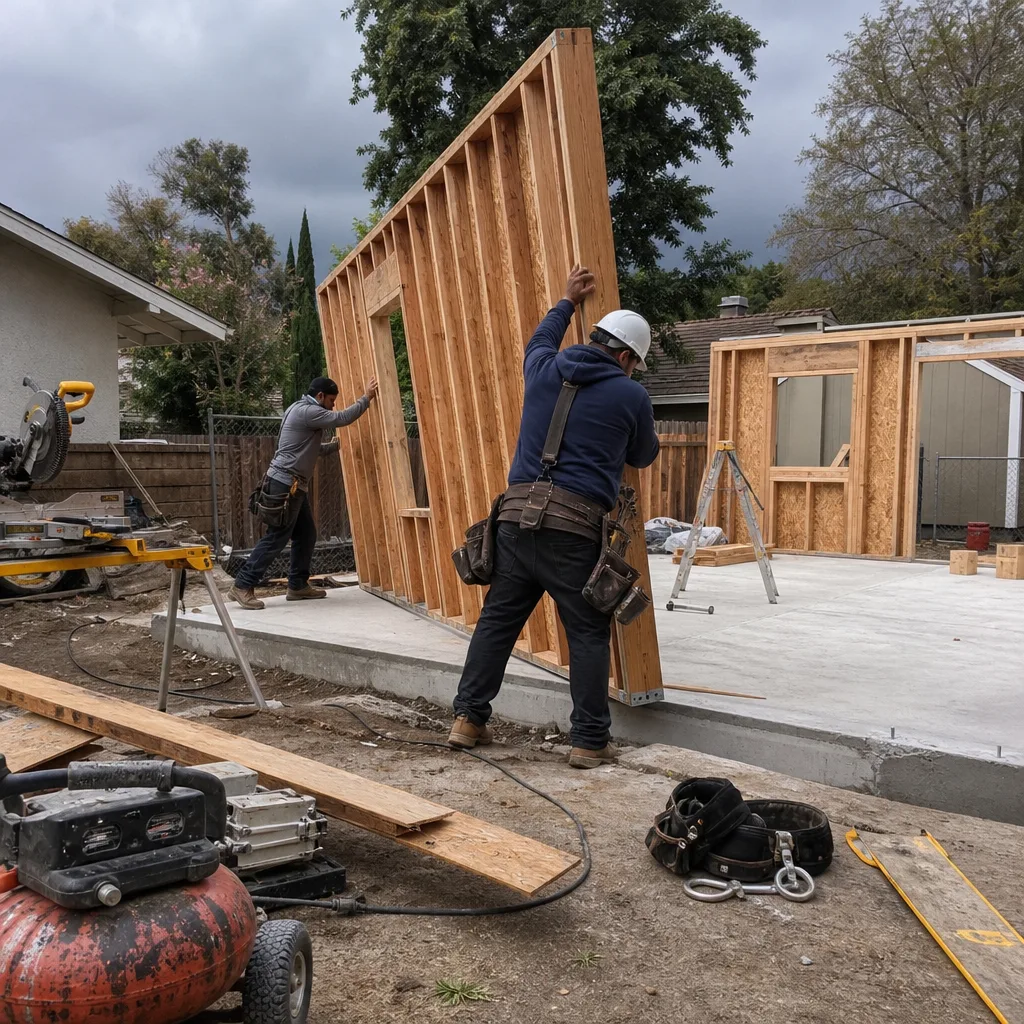
- Cracks in the slab or anchor points. The foundation wasn’t engineered for the module’s weight distribution. Plant Prefab units carry their load differently than a stick-built ADU, and concrete that hasn’t been poured to the spec in the foundation plan will show stress at the seismic anchors first.
- Water pressure drops when the main house uses water. The original contractor tied the ADU supply line into an existing hose bibb branch instead of running a dedicated 1-inch or larger line from the meter. It works on paper and fails in practice every single time the sprinklers run.
Replacement Cost & What’s Included
For site prep and utilities specifically, Thousand Oaks lots typically fall into three brackets. A flat lot with existing sewer, water, and power at the curb runs $28,000 to $35,000. A sloped lot requiring retaining, additional grading, and a longer trench run lands between $38,000 and $48,000. A lot where the sewer lateral is old, the electrical panel needs an upgrade, or the driveway has to be cut for trenching can push to $55,000 or more. Those are full turnkey numbers: permits, excavation, materials, labor, inspections passed, and final utility sign-off.
| Scope | Thousand Oaks Price Range |
|---|---|
| Flat lot, utilities at street | $28,000 – $35,000 |
| Sloped lot or long utility trench | $38,000 – $48,000 |
| Old lateral, panel upgrade, or driveway cut | $48,000 – $55,000+ |
Every quote from Fielding ADU Thousand Oaks is a written line-item price. The number you approve before we start is the number on the final invoice. No change orders because someone forgot the slope, no “unexpected soil conditions” upsell. We flag those risks during the site walk or we eat the cost. That’s the Garrison Standard, and we’ve held to it since 2006.
DIY or Call Us?
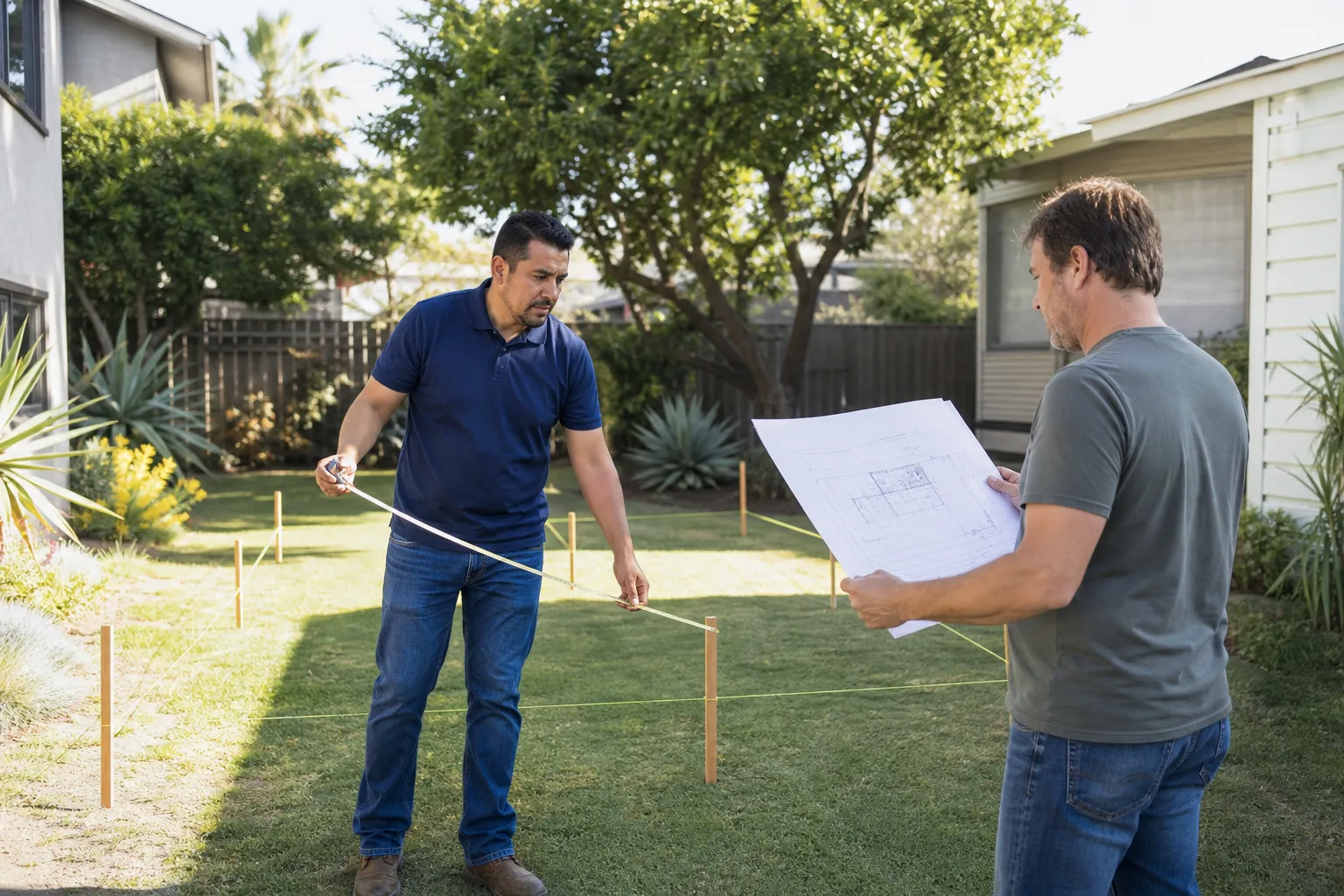
What an owner can do safely: walk the lot after rain and note where water stands. Test water pressure at the hose bibb nearest the ADU pad. Check the main panel for available breaker slots. Take photos of the utility meter locations relative to your proposed build site. All of that helps us quote faster when you call.
What you should not attempt yourself: trenching near an existing gas line, relocating a sewer lateral, tying into your main electrical panel, or pouring a foundation for a module that weighs several tons. Gas lines and buried electrical are lethal when hit. A foundation that is two inches out of level on a prefab chassis will damage the module and void the factory coverage. This is one area where an honest professional costs less than the alternative. If you’re at the planning stage or dealing with a contractor who walked off mid-project, call (805) 309-3020 and we’ll send Reed Calloway out to look at the actual lot, not a satellite photo.
FAQs
Done correctly, the buried utility rough-in and foundation should outlast the module itself. The weak points in Thousand Oaks are old sewer laterals (clay pipe can fail within 10 to 15 years if it’s original) and drainage that was never graded properly. Our workmanship carries the Done Right Promise: 365 days in writing, and if anything fails in that window, we return at no charge.
Sometimes. A sewer line with one bad joint can be spot-repaired. A foundation that’s out of level usually can’t. What we look for is whether the original defect is isolated or systemic. Either way, the site walk is free, and we’ll tell you honestly what’s repairable and what isn’t. Call (805) 309-3020 to schedule the walk.
Most Plant Prefab site prep and utility work takes 4 to 6 weeks from permit approval to inspection sign-off. The wildcard is always the city of Thousand Oaks plan check and the Ventura County utility coordination. PGE and the water district run on their own schedules. We manage that, but it means the calendar is what it is. Reed Calloway keeps a worn copy of the Ventura County building code on his truck seat, and he will quote the permit timeline chapter and verse if you ask.
We keep the common utility components on the truck and in storage in Thousand Oaks: 4-inch cleanouts, meter panels approved by Southern California Edison, seismic anchor hardware for Plant Prefab chassis spacing, and the schedule 40 fittings that the city inspector expects. If you’re mid-project and a contractor abandoned you over a missing part, call (805) 309-3020. We’ll tell you over the phone whether we have it before you pay for a service call.
Written by Reed Calloway, Owner, Fielding ADU Thousand Oaks at Fielding ADU Thousand Oaks, serving Thousand Oaks and nearby areas.